Date/Time
Date(s) - 08/07/2026
7:30 pm - 8:30 pm
Categories No Categories
The evening will feature the following speakers / talks:
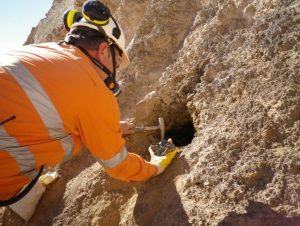
I was privileged to work at Magellan back in 2010-2011, a unique ‘laterite lead’ mine near Wiluna. The ore comprised very fine-grained cerussite and anglesite disseminated in sediments, and no coarsely crystalline material was ever found. Then one day …! I’ll the talk will focus on the Magellan deposit and the mining operation and the mineral specimen discoveries.
Craig Bosel has been a WA MinSoc member since 2008. He started collecting minerals as a 9-year-old living on a cattle station in North Queensland, and then ‘followed his dream’ by studying back in New Zealand to become a geologist. He worked in the mining industry for 39 years in WA, NZ, NT and QLD at various gold, iron ore, manganese, diamonds, uranium, lead and nickel operations before semi-retiring into Uber driving. Walking around above or underground at remote mine sites could occasionally benefit his mineral collection.
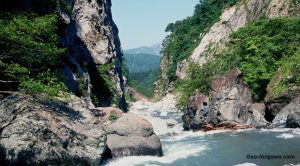 In the late 1930s, a significant jade locality was recognized within a gorge on the Kotaki River near Itoigawa, Niigata Prefecture, in Japan. Previously, ancient jade artifacts and carvings in Japan were assumed to have originated from China. Archeological evidence now pointed to a local source. Whereas jadeite can be found in many localities in Japan, Itoigawa-Omi is the only source of high-quality jade.
The site is now protected as part of the UNESCO Itoigawa Global Geopark. This Geopark also covers many other localities of geological interest and is part of a unique geological setting, within the ‘Fossa Magna’, a major terrane-bounding structure which hosts an array of metamorphic rocks (and rare minerals) as well as recent active volcanism, including Mt Fuji.
The jade occurs in high purity jadeite with white, green and lavender varieties. With luck, jade pebbles can still be found in gravels at Oyashirazu Beach, where they were washed out to sea by the Ohmi River.
Stephen Turner is a MinSocWA member and assistant editor for the Australian Journal of Mineralogy. He has collected minerals since he was a child, after receiving some specimens from his uncle who worked as a surveyor in the Kimberley region. His work as a geologist, principally involved with gold exploration, has taken him all over the world. He started a serious mineral collection while working in Peru which has continued to grow in subsequent years. Since retiring from Newmont in 2023 he has been reducing his overly large collection while focusing on collecting minerals from Western Australia and Japan.
(venue opens at 6.30 pm for socialising and Show & Tell)
The Mineralogical Society of Western Australia (MinSocWA) is a not-for-profit organization that caters to all mineral enthusiasts and people of all ages keen to learn more about minerals.
ABN 11983546312
Registered Society No. A1009304P, 13 October 2000


